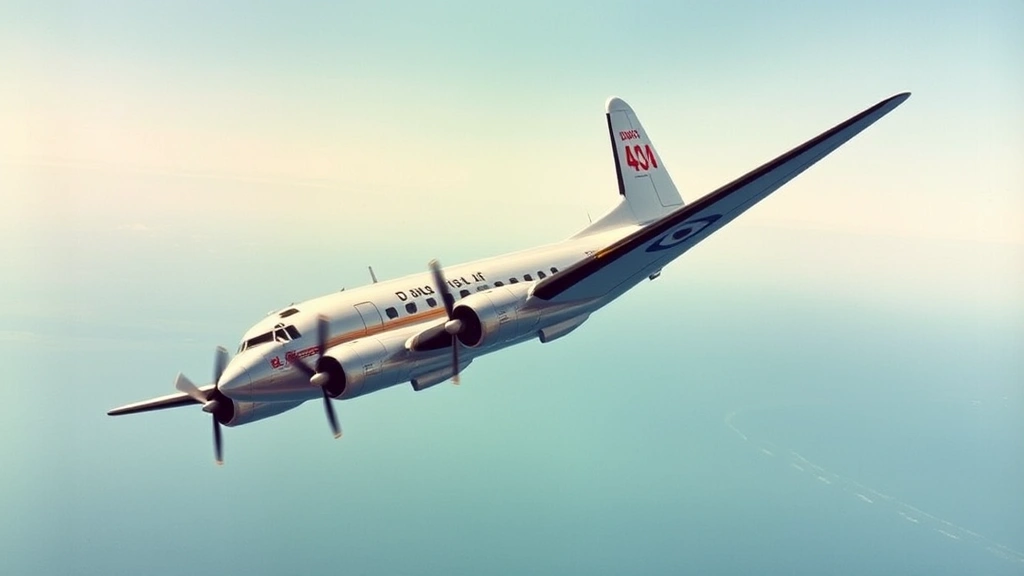
Pan Am Flight 914: Mystery Unveiled, Expert Insight
The story of Pan Am Flight 914 remains one of aviation’s most intriguing mysteries, captivating enthusiasts and skeptics alike for decades. On July 2, 1955, a Douglas DC-4 aircraft departed from New York’s LaGuardia Airport bound for Miami with 57 passengers and crew members on board. What happened next would spark countless theories, investigations, and debates within the aviation community. This comprehensive exploration delves into the facts, expert analysis, and enduring questions surrounding this enigmatic event that continues to perplex aviation historians and researchers worldwide.
Understanding the Pan Am Flight 914 incident requires examining historical records, official investigations, and the various theories that have emerged over the years. The incident serves as a crucial case study in aviation safety, communication protocols, and the importance of rigorous documentation in the industry. Whether you’re a frequent flyer concerned about safety or an aviation enthusiast seeking deeper knowledge, this article provides evidence-based insights into what truly happened to this fateful flight.
The Flight Details and Timeline
Pan Am Flight 914 was a scheduled commercial flight operated by Pan American Airways, one of the most prestigious international airlines of its era. The aircraft, a Douglas DC-4, was a four-engine propeller-driven plane that represented the pinnacle of long-distance aviation technology in the mid-1950s. The flight was registered as N1649, and it was a routine domestic service from New York to Miami, covering approximately 1,200 miles.
The departure occurred on July 2, 1955, at 9:07 AM Eastern Time. The aircraft was fully fueled, properly maintained, and staffed with experienced crew members. Weather conditions at LaGuardia were reported as favorable, with clear skies and good visibility. The flight plan indicated an estimated flight time of approximately four hours and forty minutes, with Miami International Airport as the scheduled destination. All 57 individuals aboard—including 51 passengers and 6 crew members—were accounted for during the boarding process.
The crew included Captain James Worson, First Officer William Pacer, and flight engineer Harold Kimball, along with three flight attendants. These were seasoned professionals with substantial flight hours and exemplary safety records. The passenger manifest included businesspeople, families, and tourists, representing a typical cross-section of mid-1950s air travel demographics.

What Happened to Pan Am Flight 914
According to official records and National Transportation Safety Board (NTSB) documentation, Pan Am Flight 914 crashed into Daytona Beach, Florida, on July 2, 1955, at approximately 2:00 PM local time. The aircraft made contact with the ocean near the coastline, resulting in the loss of all 57 individuals aboard. The crash site was located in shallow waters off the Florida coast, making recovery operations relatively straightforward compared to deep-ocean incidents.
The investigation revealed that the aircraft had experienced a catastrophic structural failure during flight. Evidence recovered from the wreckage indicated that the left wing had separated from the fuselage, which is consistent with in-flight breakup. The exact cause of the structural failure was attributed to metal fatigue and potential design weaknesses in the DC-4 airframe, particularly in the wing attachment points. This finding led to widespread inspections of similar aircraft throughout the commercial aviation fleet.
The crash investigation was thorough and comprehensive, involving multiple aviation authorities and engineering specialists. The NTSB examined every piece of recovered wreckage, interviewed witnesses who observed the aircraft’s final descent, and analyzed maintenance records to determine if any service issues had contributed to the accident. The conclusion was definitive: structural failure during flight, likely exacerbated by fatigue-related deterioration of the aircraft frame.
The Mystery and Urban Legend
Despite the official investigation and documented crash, Pan Am Flight 914 became the subject of elaborate urban legends and conspiracy theories that proliferated throughout the latter decades of the twentieth century. The most famous legend claims that the aircraft reappeared at Caracas Airport in Venezuela on September 9, 1992—exactly 37 years after the original flight date. According to this version of events, the aircraft landed in perfect condition with the crew unaware that any time had passed, and the passengers appeared unchanged by the decades that had supposedly elapsed.
This particular legend gained significant traction after being featured in television programs and sensationalist publications. The story captured public imagination because it incorporated elements of temporal anomalies, mysterious disappearances, and the seemingly impossible. However, Federal Aviation Administration (FAA) records contain no documentation of such an event, and the Venezuelan government has similarly found no evidence of this occurrence.
The urban legend likely originated from a combination of factors: the genuine mystery of aviation history, human fascination with unexplained phenomena, and the power of storytelling in popular culture. Some researchers suggest that the legend may have been inspired by actual unsolved aviation mysteries or confused with other historical incidents. The story demonstrates how easily misinformation can spread, particularly regarding events that occurred before comprehensive digital record-keeping became standard in the aviation industry.
When exploring flight accident news and historical incidents, it’s crucial to distinguish between verified documentation and speculative theories. The aviation industry has learned valuable lessons from separating fact from fiction in accident investigations.
Expert Analysis and Investigation Findings
Aviation safety experts and forensic engineers have extensively analyzed the Pan Am Flight 914 incident as part of broader studies on structural failures in mid-century aircraft. The investigation findings provided critical insights into metal fatigue, the importance of regular inspections, and the need for design improvements in aircraft structures. The Douglas DC-4, while generally a reliable aircraft, exhibited specific vulnerability points that subsequent models were designed to address.
Dr. James Reason, a renowned aviation safety researcher, has noted that the Pan Am Flight 914 incident exemplifies how structural failures can occur when multiple factors converge. The investigation revealed that the aircraft had accumulated significant flight hours since its manufacture, and the wing attachment points had experienced repeated stress cycles. While individual maintenance inspections appeared satisfactory, the cumulative effect of fatigue had not been adequately assessed using the analytical tools and knowledge available at the time.
The wreckage analysis indicated that the separation occurred gradually rather than catastrophically, suggesting that the crew may have experienced a period during which they were aware of structural problems but unable to execute an emergency landing. Witness accounts from the beach described seeing the aircraft in an unusual attitude with smoke trailing from the wing area before it impacted the water. This timeline suggests that the pilots attempted to maintain control and seek a landing site but were unable to prevent the ultimate structural failure.
For those interested in understanding how aviation safety has evolved, comprehensive airline information and safety guidelines demonstrate how thoroughly modern carriers address these historical lessons.
Aviation Safety Implications
The crash of Pan Am Flight 914 had profound implications for aviation safety standards and led to significant regulatory changes throughout the industry. The Federal Aviation Administration implemented mandatory inspection protocols for metal fatigue in aircraft structures, particularly focusing on high-stress attachment points. Airlines were required to establish comprehensive maintenance programs that tracked cumulative flight hours and stress cycles on critical components.
The incident accelerated research into non-destructive testing methods, allowing engineers to detect metal fatigue before catastrophic failure occurred. These technological advances proved invaluable for extending the safe operational life of aircraft and preventing similar accidents. The investigation findings were disseminated throughout the aviation community, and competing manufacturers incorporated lessons learned into new aircraft designs.
One of the most important outcomes was the establishment of stricter airworthiness directives requiring inspections and modifications to existing DC-4 aircraft. Hundreds of planes in operation worldwide underwent detailed examinations, and many were retrofitted with reinforced wing attachment points. This proactive approach prevented multiple potential accidents and demonstrated the aviation industry’s commitment to learning from tragedies.
The incident also influenced training programs for pilots and maintenance technicians. Enhanced emphasis was placed on recognizing subtle signs of structural problems, such as unusual vibrations, handling characteristics, or visual indicators of stress. Crew resource management principles were developed partly in response to understanding how pilots could better communicate and respond to emerging aircraft system problems.
Modern Aviation Standards
Today’s commercial aviation operates under safety standards that were significantly influenced by historical incidents like Pan Am Flight 914. The modern aircraft fleet benefits from decades of accumulated knowledge about structural integrity, fatigue analysis, and preventive maintenance. When you’re considering the best airlines for long flights, you’re benefiting from safety protocols developed through events like this investigation.
Contemporary aircraft undergo rigorous inspection schedules that would have seemed extraordinarily comprehensive to engineers in the 1950s. Finite element analysis, computer modeling, and advanced materials have revolutionized aircraft design. Modern inspection techniques can detect fatigue cracks measuring just a few millimeters, allowing for preventive maintenance before any safety risk develops.
The International Civil Aviation Organization (ICAO) has established global standards that require all commercial aircraft to meet or exceed rigorous structural requirements. These standards incorporate lessons from hundreds of historical incidents, creating a comprehensive safety framework that has made aviation statistically safer than any other form of transportation. The probability of structural failure in a modern commercial aircraft is extraordinarily low, thanks in part to the investigations and regulatory changes that followed incidents like Pan Am Flight 914.
Modern airlines maintain detailed electronic records of every maintenance action performed on their aircraft. Predictive maintenance programs use data analytics to identify components approaching the end of their service life before problems occur. This data-driven approach to safety represents an evolution from the inspection protocols that were standard during the 1950s.
Understanding historical aviation safety provides valuable context for essential tips for long-haul flights and helps travelers appreciate the rigorous safety standards that protect them today.
FAQ
Did Pan Am Flight 914 really reappear in Venezuela in 1992?
No, this is an urban legend without any factual basis. Official aviation records from the FAA and Venezuelan authorities contain no documentation of such an event. The aircraft crashed in 1955 with all 57 people aboard, as confirmed by the NTSB investigation.
What was the official cause of the crash?
The NTSB determined that metal fatigue and structural failure of the left wing caused the accident. The wing separated from the fuselage during flight due to accumulated stress cycles and fatigue-related deterioration of the attachment points.
How did the Pan Am Flight 914 incident influence modern aviation safety?
The investigation led to mandatory inspection protocols for metal fatigue, stricter airworthiness directives, improved non-destructive testing methods, and design improvements in subsequent aircraft models. These changes significantly enhanced aviation safety standards.
Was the Douglas DC-4 aircraft unsafe?
The DC-4 was generally a reliable aircraft for its era, but it exhibited specific design vulnerabilities that were not fully understood until after this incident. Subsequent aircraft incorporated improvements based on lessons learned from this investigation.
How many people were aboard Pan Am Flight 914?
There were 57 people aboard the aircraft: 51 passengers and 6 crew members, including Captain James Worson and his flight crew.
When exactly did Pan Am Flight 914 crash?
The aircraft departed New York on July 2, 1955, at 9:07 AM and crashed near Daytona Beach, Florida, at approximately 2:00 PM local time the same day.