Flight 914 Mystery: Unsolved Aviation Case
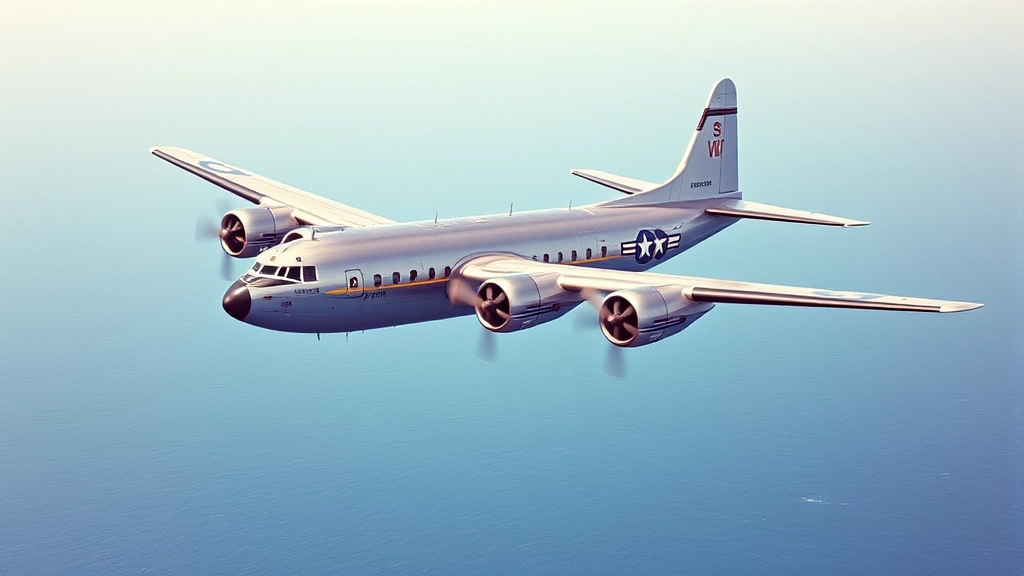
The disappearance of Flight 914 remains one of aviation’s most perplexing mysteries, captivating researchers, aviation enthusiasts, and the general public for decades. On July 2, 1955, a Douglas DC-4 aircraft operated by Pan American Airways vanished without a trace during a routine flight from New York to Miami, taking 57 passengers and crew members with it. Unlike other documented aviation incidents, Flight 914 represents a case shrouded in conflicting accounts, unexplained radar data, and theories that challenge our understanding of flight operations and air traffic control procedures.
What makes Flight 914 particularly fascinating is not merely the disappearance itself, but the circumstances surrounding it—the communication gaps, the conflicting testimonies, and the questions that remain unanswered even today. This case has inspired countless investigations, documentaries, and theories, making it a cornerstone in aviation mystery literature. Whether examining this incident alongside other notable aviation accidents or studying the evolution of air traffic control, Flight 914 stands as a sobering reminder of aviation’s inherent risks and the importance of robust safety protocols.
The Flight 914 Incident: What We Know
Flight 914 was scheduled as a domestic commercial flight connecting two major American cities. The aircraft, a Douglas DC-4, was among the most reliable transport planes of its era, having accumulated thousands of flight hours with an excellent safety record. The flight was fully staffed with experienced pilots and crew members, all of whom met the rigorous standards established by the Civil Aeronautics Administration (CAA), the precursor to today’s Federal Aviation Administration (FAA).
The passenger manifest included businesspeople, families, and tourists—ordinary travelers embarking on what should have been a routine journey. Weather conditions on the day of departure were reported as generally favorable, though some sources mention scattered clouds and mild turbulence along the planned flight corridor. The aircraft departed on schedule, and initial communications between the cockpit and air traffic control appeared normal, with pilots confirming their altitude, heading, and estimated time of arrival at their destination.
What distinguishes Flight 914 from many other aviation incidents is the sudden nature of its disappearance. Unlike cases where wreckage is discovered or distress signals are transmitted, Flight 914 simply ceased to exist in air traffic control radar coverage. No mayday call was recorded, no debris field was discovered, and no conclusive evidence emerged to explain what happened to the aircraft and its occupants. This absence of physical evidence has allowed speculation and alternative theories to flourish, creating a persistent mystery that has outlasted many of the individuals involved in the original investigation.
The Disappearance Timeline
The chronology of Flight 914’s disappearance, while relatively straightforward in its basic facts, becomes more complex when examining the details and conflicting accounts. The aircraft departed from New York’s airport in the early afternoon, having completed all preflight checks and received clearance for takeoff. The first hour of flight proceeded without incident, with the crew maintaining communication with various air traffic control facilities along the established flight path.
As the aircraft approached the midpoint of its journey, air traffic controllers began attempting to raise the flight on the assigned frequency. Initial attempts yielded no response, which was not entirely unusual given the communication equipment available in 1955. However, when multiple subsequent attempts failed to establish contact, controllers initiated emergency protocols. They attempted to reach the aircraft on alternate frequencies and requested other nearby aircraft to relay messages to Flight 914. All efforts proved unsuccessful.
The timeline of search and rescue operations began immediately, with military and civilian assets being mobilized across the southeastern United States. The Coast Guard deployed vessels, the Air Force scrambled search aircraft, and ground teams prepared to investigate any potential crash sites. Remarkably, despite extensive search efforts covering thousands of square miles of terrain and ocean, no conclusive evidence of the aircraft was discovered during the initial investigation phases.
The search operation continued for weeks, with investigators expanding their search radius and adjusting their hypotheses about where the aircraft might have gone down. Fishermen, private pilots, and civilians across multiple states were asked to report any unusual sightings or debris. The absence of findings only deepened the mystery, leading investigators to question their initial assumptions about the flight’s route and final position.
Theories and Investigations
Over the decades, numerous theories have emerged attempting to explain Flight 914’s disappearance. These range from conventional explanations rooted in aeronautical science to more speculative ideas that push the boundaries of conventional thinking. Each theory has its proponents and critics, and examining them provides insight into how aviation mysteries are analyzed and debated.
Mechanical Failure Hypothesis: One prominent theory suggests that Flight 914 experienced a catastrophic mechanical failure that was not immediately apparent to the crew. Possible scenarios include structural failure of the fuselage, complete engine failure, or a rapid decompression event. Proponents of this theory point to the sudden loss of radio contact as evidence of a catastrophic event that would have incapacitated the aircraft within seconds. However, critics note that the Douglas DC-4 had proven safety systems and redundancies that made such a scenario unlikely without warning signs.
Human Error and Navigation Failures: Another theory focuses on the possibility of navigation errors or disorientation by the flight crew. In the 1950s, navigation relied heavily on radio beacons and visual landmarks, making it possible for aircraft to become lost. If the crew became disoriented and descended below safe altitudes over water or terrain, they might have impacted the ground or ocean before realizing their error. This theory is supported by documented cases of other aircraft that disappeared due to navigation errors during this era.
Weather-Related Incidents: Severe weather, including thunderstorms and wind shear, could have contributed to Flight 914’s disappearance. While weather was reported as generally favorable, localized severe weather could have developed along the flight path without being detected by ground-based weather observation stations. Severe wind shear or hail damage could have compromised the aircraft’s structural integrity or caused loss of engine power.
Military Involvement Theories: Some researchers have suggested that military operations may have been involved in Flight 914’s disappearance, either directly or indirectly. Theories range from accidental destruction by military aircraft to intentional interception due to Cold War tensions. While these theories lack substantial supporting evidence, they reflect the geopolitical context of 1955 and the secrecy surrounding military aviation activities.
Communication and Radar Data
The communication records from Flight 914 provide some of the most intriguing clues in the case. Radio logs show that the flight maintained regular contact with air traffic control throughout the early portions of its journey. The pilots transmitted position reports, requested altitude changes, and confirmed navigation instructions in accordance with standard procedures. The quality and tone of these communications gave no indication of distress or concern.
However, the exact nature of the final transmissions remains disputed. Some sources claim the last communication was a routine position report, while others suggest the pilots may have been attempting to report an anomaly or request assistance. The ambiguity stems partly from the passage of time and the loss or degradation of original documentation. Additionally, radio communication in the 1950s was subject to static, interference, and the limitations of the equipment available, which could have resulted in incomplete or garbled messages.
Radar data from the period presents another puzzle. The primitive radar systems of 1955 had limited range and resolution compared to modern systems. Some accounts suggest that radar operators lost track of Flight 914’s blip at a specific point along its route, while other sources indicate that the aircraft was tracked until it was expected to land. These discrepancies in radar records have fueled speculation about what actually happened and when the aircraft’s final moments occurred.
The National Transportation Safety Board (NTSB), which investigates aviation incidents, faced significant challenges in analyzing the available data. The lack of a flight data recorder, which was not standard equipment in 1955, meant that investigators had no objective record of the aircraft’s performance parameters during its final flight. This absence of technical data has made it impossible to definitively determine the aircraft’s condition when it disappeared.
Impact on Aviation Safety
The disappearance of Flight 914, along with other aviation mysteries and accidents from the early jet age, prompted significant changes to aviation safety protocols and regulations. The incident contributed to the development of improved communication systems, more robust navigation equipment, and enhanced radar capabilities. Aviation authorities recognized that the communication and tracking systems of the era were inadequate for safely managing increasing air traffic volumes.
One direct consequence was the acceleration of development for aircraft equipped with flight data recorders and cockpit voice recorders. These devices, which became standard on commercial aircraft within a decade of Flight 914’s disappearance, have proven invaluable in investigating subsequent accidents and understanding what happens in the final moments before a crash. The data they provide has saved countless lives by enabling investigators to identify problems and recommend corrective actions.
The incident also influenced the development of mandatory reporting procedures and the establishment of more sophisticated air traffic control systems. The need to track aircraft more reliably and maintain continuous communication led to investments in ground-based navigation aids and the eventual development of modern radar and satellite-based tracking systems. These improvements have made aviation substantially safer and have virtually eliminated the possibility of a large commercial aircraft disappearing without a trace in modern times.
Furthermore, Flight 914 and similar cases highlighted the importance of standardized training for pilots and crew members. Enhanced training in emergency procedures, communication protocols, and navigation techniques became standard requirements for commercial aviation. The International Civil Aviation Organization (ICAO) established international standards that ensured consistent safety practices across borders and airlines.
Comparing Similar Cases
To understand Flight 914 in context, it’s instructive to examine other significant aviation mysteries and accidents. The Flight 5191 Comair accident occurred decades later but shares some similarities in terms of the investigation challenges and the human factors involved. More recently, cases like Emirates Flight EK382 demonstrate how modern aircraft with advanced tracking systems can still experience unexpected incidents, though with far greater transparency and documentation.
The disappearance of Malaysia Airlines Flight 370 in 2014 represents a modern parallel to Flight 914, as it involved a large commercial aircraft that vanished despite sophisticated tracking systems and satellite communications. The MH370 investigation, while ultimately more successful than the Flight 914 investigation, revealed how even contemporary technology has limitations and how human factors can complicate aviation safety. The contrast between these cases illustrates the dramatic improvements in aviation safety and investigation capabilities over the past several decades.
By examining historical aviation incidents on our blog, travelers and aviation enthusiasts can appreciate how far the industry has come in terms of safety, communication, and accountability. Each incident, including Flight 914, has contributed to the lessons learned and systems improvements that make modern air travel extraordinarily safe.
Modern Aviation Tracking
Today’s aviation environment bears little resemblance to the 1950s in terms of tracking and monitoring capabilities. Modern commercial aircraft are equipped with Automatic Dependent Surveillance-Broadcast (ADS-B) systems that continuously transmit their position, altitude, and velocity to ground stations and other aircraft. These signals are received by multiple independent systems, making it virtually impossible for a commercial aircraft to disappear undetected.
Additionally, modern aircraft have satellite communication systems that maintain constant contact between the aircraft and ground operations centers. If an aircraft experiences an emergency, this communication remains active even if radio contact with air traffic control is lost. Cockpit voice recorders and flight data recorders capture detailed information about the aircraft’s performance and crew communications, providing investigators with comprehensive data in the event of an incident.
The ICAO’s safety initiatives continue to enhance requirements for aircraft tracking and emergency communication. Regulations now mandate that airlines provide regular position reports via satellite, and aircraft cannot legally depart on oceanic flights without functioning satellite communication systems. These measures, implemented after the MH370 disappearance, ensure that large commercial aircraft can no longer vanish without a comprehensive record of their final moments.
For travelers concerned about safety, these modern systems provide reassurance. When booking flights on international routes or long-distance journeys, understanding that the best airlines for long flights operate aircraft with cutting-edge tracking and safety systems can enhance confidence in air travel. The evolution from Flight 914’s era to today represents one of aviation’s greatest achievements: making air travel not only fast and convenient but extraordinarily safe.
FAQ
What happened to Flight 914?
The exact cause of Flight 914’s disappearance remains unknown. The aircraft vanished during a routine flight in 1955 without transmitting a distress signal or leaving discoverable wreckage. Investigations have explored mechanical failure, navigation errors, severe weather, and other theories, but no conclusive evidence has definitively explained what occurred.
How many people were on Flight 914?
Flight 914 carried 57 people total, including passengers and crew members. The passenger manifest included businesspeople, families, and tourists on what was intended to be a routine domestic flight.
Has any wreckage from Flight 914 been found?
Despite extensive search operations and investigations spanning decades, no conclusive wreckage from Flight 914 has been recovered and definitively identified as belonging to the aircraft. The absence of physical evidence is one of the most puzzling aspects of this case.
Why is Flight 914 still a mystery?
Flight 914 remains mysterious due to the combination of limited technology in 1955, incomplete communication and radar records, and the absence of physical evidence. The aircraft disappeared before the era of flight data recorders and satellite tracking, making investigation extraordinarily difficult.
What changes did Flight 914 inspire in aviation?
Flight 914, along with other aviation incidents, prompted the development of flight data recorders, improved communication systems, better radar technology, enhanced navigation aids, and more rigorous pilot training standards. These changes have made modern aviation substantially safer and made it virtually impossible for large commercial aircraft to disappear undetected.
Could Flight 914 disappear today?
No. Modern aircraft are equipped with ADS-B transponders, satellite communication systems, cockpit voice recorders, and flight data recorders that would make it impossible for a commercial aircraft to disappear without a comprehensive record of its final moments. Regulatory requirements ensure continuous tracking and communication throughout flights.
What routes are similar to Flight 914’s journey?
Flight 914 flew from New York to Miami, a route that remains popular today. Travelers interested in this corridor can explore options for similar domestic flights and routes with modern safety features and tracking systems.
Are there other aviation mysteries like Flight 914?
Yes, aviation history includes several unsolved mysteries and significant accidents. However, modern technology has made it increasingly rare for aircraft to disappear without explanation. Historical cases like Flight 914 have driven improvements that make contemporary air travel exceptionally safe.
How do I book safe flights today?
Modern commercial aviation is extraordinarily safe. When booking flights, consider selecting refundable tickets for flexibility and peace of mind. All commercial airlines operating in the United States and internationally must meet stringent safety standards and operate aircraft with modern tracking and safety systems.