Why Do Planes Fly? Physics Explained
Every day, millions of passengers board aircraft without giving much thought to the remarkable physics that keeps them airborne. The ability of a massive metal tube filled with hundreds of people to defy gravity and soar through the atmosphere is one of humanity’s greatest engineering achievements. Understanding the fundamental principles behind flight not only satisfies curiosity but also helps travelers appreciate the incredible science that makes modern air travel possible.
The physics of flight involves a delicate balance of forces, aerodynamic principles, and engineering precision. Whether you’re a frequent flyer exploring our best airlines for frequent flyers or simply curious about how aircraft operate, grasping these concepts provides deeper insight into one of the most important transportation methods of our time. This comprehensive guide breaks down the complex science into understandable explanations.
The Four Forces of Flight
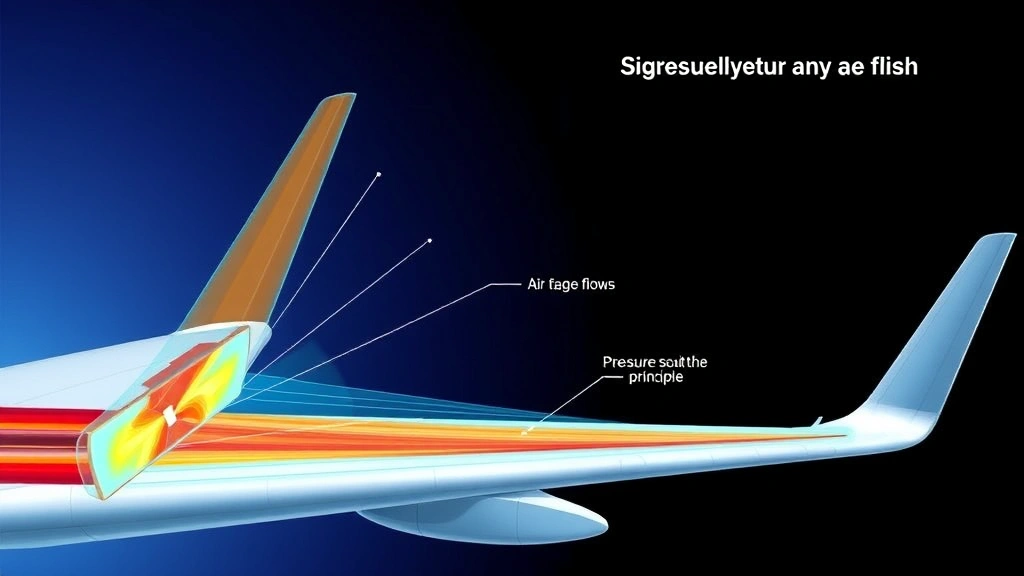
The foundation of understanding why planes fly rests on comprehending the four fundamental forces that act upon any aircraft in flight: lift, weight, thrust, and drag. These forces work in concert to enable flight, and understanding their relationships is essential to grasping aerodynamic principles.
Lift is the upward force generated by the wings as air flows over and under them. This force must be greater than or equal to the aircraft’s weight for the plane to become airborne and remain in flight. Weight is the downward gravitational force acting on the entire aircraft, including the fuselage, engines, fuel, cargo, and passengers. Thrust is the forward force produced by the engines, whether jet turbines or propellers, which propels the aircraft through the air. Drag is the resistance force opposing the aircraft’s motion through the air.
For an aircraft to take off, lift must exceed weight. During level flight, lift equals weight, and thrust equals drag. This balance of forces is what allows planes to maintain altitude and cruise efficiently. When a pilot wants to climb, they increase thrust and adjust the wing angle to generate additional lift. To descend, they reduce thrust and angle the wings differently to decrease lift.
The relationship between these four forces determines every aspect of flight, from takeoff acceleration to landing deceleration. Pilots and engineers constantly monitor and adjust these forces to maintain safe, efficient flight operations. Understanding these principles helps explain why planes fly the way they do and how pilots maintain control throughout a flight.
Bernoulli’s Principle and Wing Design
One of the most important concepts in aviation physics is Bernoulli’s Principle, named after Swiss mathematician Daniel Bernoulli. This principle states that as the speed of a fluid (in this case, air) increases, the pressure within that fluid decreases. This seemingly counterintuitive relationship is crucial to understanding how airplane wings generate lift.
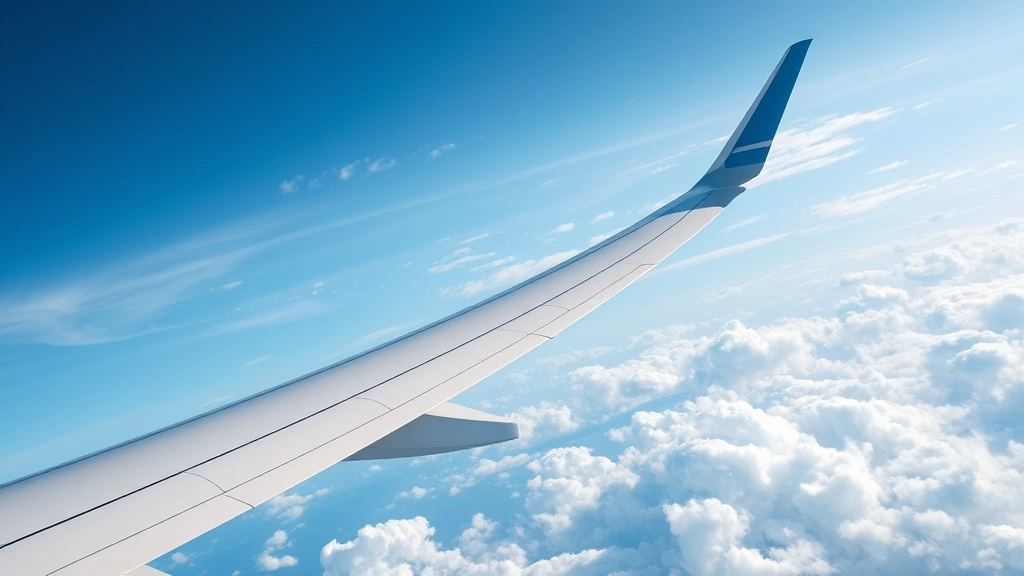
Wing design is specifically engineered to take advantage of Bernoulli’s Principle. The upper surface of an airplane wing is more curved than the lower surface, creating what’s called an airfoil shape. As the aircraft moves forward, air must travel faster over the curved upper surface than over the flatter lower surface. According to Bernoulli’s Principle, this faster-moving air over the top creates lower pressure compared to the slower-moving air underneath. This pressure difference creates an upward force—lift.
Modern aircraft wings are marvels of engineering, with carefully calculated curves and angles optimized for different flight regimes. Wing design varies significantly depending on the aircraft’s intended use. Commercial airliners have wings designed for efficiency at cruise altitudes, while military fighter jets have wings optimized for high-speed maneuvers. Regional aircraft and long-haul jets each have distinct wing characteristics suited to their specific operational requirements.
The angle of attack—the angle between the wing and the oncoming air—also plays a critical role in lift generation. As an aircraft increases its angle of attack, lift increases up to a certain point. However, if the angle becomes too steep, the smooth airflow over the wing breaks down in a phenomenon called a stall, which dramatically reduces lift. Pilots must carefully manage the angle of attack to maintain optimal lift throughout flight.
Lift Generation Explained
Lift is generated through a combination of pressure differences and the deflection of air. While Bernoulli’s Principle explains part of the story, the complete picture involves understanding how wings redirect air downward, which by Newton’s Third Law creates an equal and opposite upward force.
As a wing moves through the air, it deflects air downward. This downward deflection of air results in an upward reaction force on the wing—lift. The curved shape of the airfoil enhances this effect by creating favorable pressure distributions. The lower pressure on top of the wing combined with the relatively higher pressure on the bottom creates a net upward force.
The amount of lift generated depends on several factors: wing area, air density, velocity, and the lift coefficient determined by wing shape and angle of attack. This relationship is expressed in the lift equation: Lift = 0.5 × Air Density × Velocity² × Wing Area × Lift Coefficient. Notice that lift increases with the square of velocity, meaning doubling an aircraft’s speed quadruples the lift generated. This is why aircraft need significant runway length to reach takeoff speed.
Different wing configurations serve different purposes. High-aspect-ratio wings (long and narrow) are efficient for long-distance cruising because they generate lift with minimal drag. Low-aspect-ratio wings (short and wide) are better for high-speed flight. Commercial airliners use designs that balance efficiency with practicality, while understanding these principles helps explain why essential tips for long haul flights often mention aircraft efficiency and cruise altitudes.
Thrust and Propulsion Systems
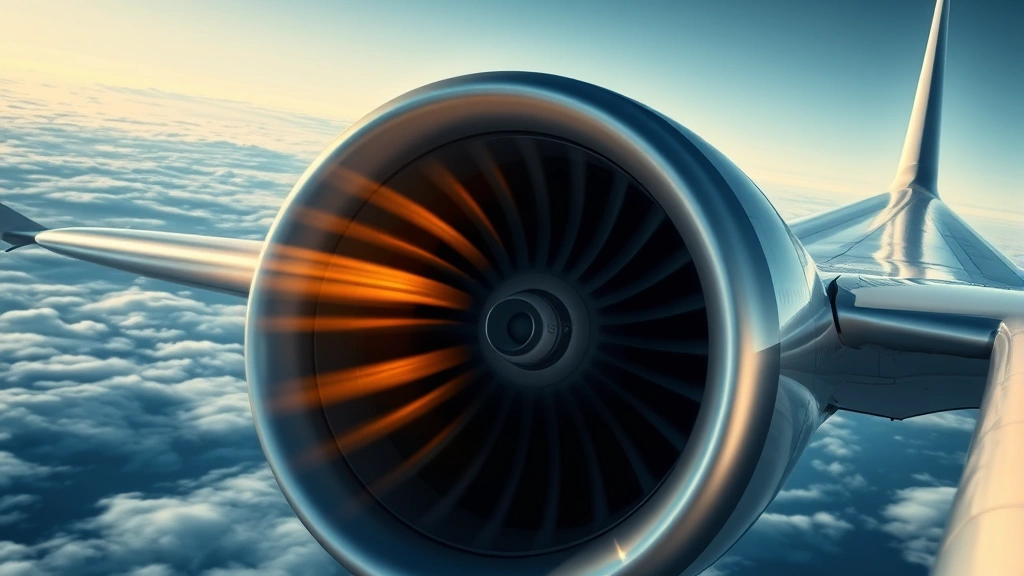
Thrust is the force that propels an aircraft through the air, and it’s generated by engines. Modern commercial aircraft predominantly use jet engines, which operate on the principle of Newton’s Third Law: for every action, there’s an equal and opposite reaction.
Jet engines work by drawing in air through the front intake, compressing it, mixing it with fuel, igniting the mixture, and expelling the hot exhaust gases out the back at high speed. This expulsion of mass at high velocity creates thrust that propels the aircraft forward. Turbofan engines, the most common type on modern airliners, use a large fan at the front that pushes most of the air around the engine core, providing both efficiency and noise reduction.
The amount of thrust an engine produces can be adjusted by the pilot through throttle controls. During takeoff, engines produce maximum thrust to accelerate the aircraft to takeoff speed. During cruise, engines operate at a reduced thrust setting that’s just sufficient to overcome drag and maintain altitude. During descent and landing, engines are throttled back further, and in some cases, reverse thrust is applied to help slow the aircraft.
Different aircraft require different amounts of thrust based on their weight and aerodynamic characteristics. A small regional jet might have engines producing 20,000 pounds of thrust each, while a large wide-body aircraft might have engines producing over 70,000 pounds of thrust. The relationship between available thrust and aircraft weight is critical to performance—aircraft with higher thrust-to-weight ratios can climb faster and accelerate quicker.
Drag and Air Resistance
Drag is the resistance force that opposes an aircraft’s motion through the air. Understanding and minimizing drag is crucial to efficient flight operations. There are two primary types of drag: parasitic drag and induced drag.
Parasitic drag includes all resistance that doesn’t contribute to lift generation. This includes skin friction drag (caused by air rubbing against the aircraft’s surface), form drag (caused by the aircraft’s shape pushing air aside), and interference drag (caused by components interacting with airflow). Aircraft designers minimize parasitic drag through streamlined shapes, smooth surfaces, and careful attention to every protrusion from the fuselage.
Induced drag is a consequence of generating lift. As the wing creates lift by deflecting air downward, it creates vortices at the wingtips. These vortices represent wasted energy and create drag. Induced drag is inversely related to wing aspect ratio—longer, narrower wings produce less induced drag than short, wide wings. This is why long-distance aircraft have relatively long, slender wings.
Total drag increases with velocity, and the relationship is not linear. In fact, parasitic drag increases with the square of velocity, meaning small increases in speed can result in significant increases in fuel consumption. This is why aircraft cruise at optimized speeds that balance fuel efficiency with flight time. Pilots and engineers carefully consider drag when planning flights and selecting cruising altitudes.
Aircraft employ various devices to manage drag. Flaps on the wings increase lift during takeoff and landing but also increase drag, which is desirable during these phases. Slats on the leading edge of wings help maintain smooth airflow at lower speeds. Spoilers can be deployed to increase drag and reduce lift when needed for descent or landing.
Weight and Aircraft Design
Weight is the gravitational force pulling an aircraft downward, and it’s one of the most important factors in aircraft design. Every component of an aircraft, from the fuselage to the avionics, contributes to total weight. Aircraft designers constantly work to minimize weight while maintaining structural integrity and safety.
Modern aircraft use advanced materials like aluminum alloys, composite materials, and titanium alloys to achieve the best strength-to-weight ratios. These materials allow engineers to build aircraft that are strong enough to withstand flight loads and pressurization stresses while remaining as light as possible. A modern wide-body airliner might weigh 400,000 pounds empty, but its structure is optimized to minimize this weight.
The relationship between weight and other flight characteristics is significant. An aircraft’s maximum takeoff weight (MTOW) is the heaviest weight at which it’s certified to fly. This limit exists because as weight increases, the amount of lift required increases, which requires either higher speed or a larger angle of attack. Eventually, the aircraft reaches a point where it cannot generate enough lift at safe speeds.
Fuel represents a substantial portion of an aircraft’s weight, particularly on long-haul flights. A Boeing 747 can carry up to 238,000 pounds of fuel, which represents a significant portion of its maximum takeoff weight. Fuel management is critical during flight—pilots must ensure they have sufficient fuel to reach their destination plus required reserves, but not so much fuel that it creates excessive weight and fuel consumption.
Weight distribution is also crucial. The center of gravity—the point around which an aircraft’s weight is balanced—must remain within specific limits for safe flight. If the center of gravity shifts too far forward or backward, the aircraft becomes difficult or impossible to control. Airlines carefully manage cargo loading and passenger seating to maintain proper weight distribution.
How Pilots Control Flight
Understanding the physics of flight is essential to understanding how pilots control aircraft. Pilots use control surfaces—movable parts of the aircraft—to adjust the forces of flight and direct the aircraft as desired.
The ailerons are located on the trailing edge of the wings and control roll (rotation around the longitudinal axis). When a pilot moves the control stick left, the left aileron moves up and the right aileron moves down. This reduces lift on the left wing and increases it on the right wing, causing the aircraft to roll left. Coordinating aileron movement with other controls allows pilots to execute smooth turns.
The elevator is located on the horizontal stabilizer at the tail and controls pitch (rotation around the lateral axis). Moving the control stick back deflects the elevator upward, which increases lift on the tail, pushing the nose up. This increases the wing’s angle of attack, generating more lift and causing the aircraft to climb. Conversely, pushing the stick forward reduces lift on the tail, allowing the nose to drop and the aircraft to descend.
The rudder is located on the vertical stabilizer at the tail and controls yaw (rotation around the vertical axis). Pressing the right rudder pedal deflects the rudder right, pushing the tail left and the nose right. The rudder is primarily used to coordinate turns and counteract adverse yaw effects.
Beyond control surfaces, pilots adjust engine thrust to control speed and the rate of climb or descent. Modern aircraft also have advanced autopilot systems that can control pitch and roll automatically, following programmed flight paths with remarkable precision. For more information about how airlines operate these complex systems, check out our airlines key information and tips for travelers guide.
Safety Systems and Physics
Aviation safety relies fundamentally on understanding and respecting the physics of flight. Aircraft are designed with multiple redundant systems to ensure that even if one system fails, others can maintain safe flight.
Stall prevention is a critical safety concern. A stall occurs when the angle of attack becomes too steep and smooth airflow over the wing breaks down, causing a sudden loss of lift. Modern aircraft have stall warning systems that alert pilots when they’re approaching a stall condition. Many aircraft also have automatic stall prevention systems that adjust control surfaces to prevent a stall from occurring.
Structural design accounts for the forces experienced during flight. Aircraft are designed to withstand forces significantly greater than those encountered in normal operations. The wings of an aircraft can bend dramatically without permanent deformation, absorbing the forces of turbulence and maneuvering without damage. Aircraft undergo rigorous inspection and testing to ensure structural integrity throughout their service lives.
Weather impacts flight physics significantly. Wind shear—sudden changes in wind speed or direction—can affect lift and drag unpredictably. Turbulence—irregular air motion—creates temporary changes in lift that can cause uncomfortable or even dangerous situations. Pilots are trained to recognize weather conditions that might affect flight physics and to adjust their operations accordingly. Understanding these principles helps explain why flight information handbook resources emphasize weather awareness.
Modern flight management systems use physics-based calculations to optimize flight paths, calculate fuel consumption, and predict arrival times. These systems continuously monitor aircraft performance and make adjustments to maintain efficient flight. The integration of physics, engineering, and technology creates the safe, efficient air transportation system we rely on today.
For travelers interested in learning more about how airlines operate these sophisticated systems, our flight board provides current information about aircraft operations and scheduling. Additionally, our SkyVoyage Hub Blog regularly publishes articles about aviation science and technology.
FAQ
What is the most important force in making planes fly?
Lift is the most critical force because it must overcome weight for flight to occur. However, all four forces—lift, weight, thrust, and drag—work together. Without sufficient thrust to accelerate to takeoff speed, the aircraft cannot generate enough lift. The balance and coordination of all four forces is essential to flight.
Can a plane fly without engines?
Yes, gliders and sailplanes can fly without engines by riding rising air currents called thermals. Powered aircraft can also glide if engines fail, using altitude to generate forward speed and maintain lift until landing. However, continuous powered flight requires engines to produce thrust.
Why do planes need to go fast to take off?
Speed is essential because lift depends on velocity squared. The faster an aircraft moves through the air, the more lift its wings generate. During takeoff, the aircraft must reach a speed where the wings generate enough lift to overcome the aircraft’s weight. This speed is called the rotation speed or liftoff speed.
How do planes stay up in the air?
Planes stay airborne when lift equals weight. The wings continuously generate lift as long as the aircraft moves through the air at sufficient speed with an appropriate angle of attack. Pilots maintain this balance by adjusting thrust, which controls speed, and by adjusting control surfaces, which control the angle of attack.
Why do airplane wings have that curved shape?
The curved airfoil shape is designed to take advantage of Bernoulli’s Principle. The curvature causes air to move faster over the top of the wing than the bottom, creating lower pressure on top. This pressure difference generates lift. The specific curve is optimized based on the aircraft’s intended use and operating speeds.
What happens if an airplane loses an engine?
Modern aircraft are designed with sufficient thrust that they can continue flying safely even with one engine inoperative. The remaining engines produce enough thrust to maintain flight, though the aircraft may not be able to climb and will descend gradually. Pilots are trained extensively in single-engine operations and will divert to the nearest suitable airport.