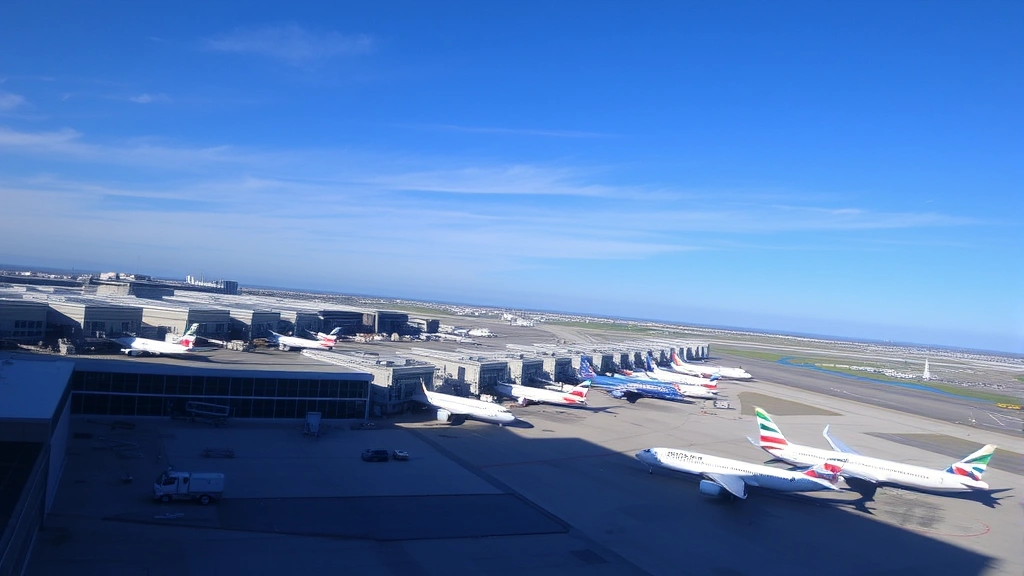
Boston to NYC Flights: Booking Strategies 2023
The Boston to New York flight route is one of the most traveled corridors in the Northeast, connecting two of America’s most vibrant cities. Whether you’re a business traveler making weekly commutes or a leisure traveler exploring the Big Apple, understanding how to book strategically can save you significant money and time. This comprehensive guide breaks down everything you need to know about securing the best fares on Boston to New York flights, from timing your purchase to comparing carriers and utilizing insider tricks that savvy travelers swear by.
Flying between Boston Logan International Airport (BOS) and New York’s three major airports—LaGuardia (LGA), Newark (EWR), and JFK—offers flexibility in routing options. However, this abundance of choices can be overwhelming without proper strategy. The short 200-mile distance means flight times hover around one hour, making this an ideal air route for those seeking speed over longer ground transportation options. In 2023, understanding booking dynamics, seasonal pricing patterns, and airline-specific strategies has become essential for maximizing your travel budget.
Understanding the Boston to NYC Route
The Boston to New York flight route serves millions of passengers annually, making it one of the most competitive markets in American aviation. Major carriers operating this route include JetBlue, Southwest Airlines, American Airlines, Delta Air Lines, and Northeast regional carriers. Each airline brings different pricing strategies, loyalty program benefits, and service standards to the table.
Boston Logan Airport serves as a major hub for JetBlue, which operates frequent flights to all three New York area airports. This hub status means JetBlue often offers competitive pricing and frequent schedules on this route. Southwest Airlines, with its point-to-point model, frequently competes aggressively on Northeast routes. American Airlines and Delta leverage their hub operations at nearby airports to offer connecting options, though direct flights are typically more convenient for this short distance.
The three New York area airports offer different advantages. LaGuardia serves Manhattan most directly with the shortest ground transportation time. Newark Liberty International Airport provides excellent ground access and often features lower fares. JFK International, while farther from Manhattan, sometimes offers the most competitive pricing. Understanding your final destination in the New York area is crucial for calculating true trip cost, including ground transportation.
Flight duration on this route averages 1 hour to 1 hour 15 minutes, making it one of the shortest commercial flights you can take in the United States. Early morning flights often depart Boston between 6:00 and 8:00 AM, while evening return flights typically depart New York between 5:00 and 8:00 PM. Understanding these patterns helps you find flights aligned with your schedule and often at better prices.
Best Times to Book Your Flight
Booking timing significantly impacts your final ticket price on the Boston to NYC route. Research indicates that booking 1-3 weeks in advance typically yields the best fares for this short-haul route, compared to the 6-8 weeks recommended for longer flights. For business travelers flying frequently, this shorter booking window requires more active monitoring of fares and quick decision-making when prices drop.
Day-of-week pricing patterns show distinct trends on this route. Tuesday through Thursday flights typically offer the lowest fares, as business travelers dominate Monday and Friday bookings. Weekend flights, especially Saturday mornings and Sunday evenings, command premium pricing due to leisure traveler demand. If your schedule permits flexibility, shifting travel to midweek days can yield 20-40% savings on comparable flights.
Seasonal variations also play a crucial role in Boston to NYC flight pricing. Summer months (June-August) see elevated prices due to tourism and warm weather travel. Fall foliage season (September-October) brings additional demand. Winter months, excluding the Christmas-New Year period, often feature the lowest fares. Spring break and holiday weekends consistently show premium pricing. Planning non-essential trips during shoulder seasons—late April through May and early November—often provides optimal pricing.
Time-of-day pricing reveals another layer of strategy. Ultra-early morning flights (departing before 7:00 AM) and late evening flights (departing after 7:00 PM) typically cost 15-30% less than midday options. While these inconvenient times challenge many travelers, they represent genuine opportunities for price-conscious flyers. Red-eye flights, though rare on this short route, would theoretically offer maximum savings but are rarely operated.
Understanding the best times to book airline tickets requires monitoring price trends consistently. Setting up price alerts on Google Flights, Kayak, and airline websites ensures you capture deals when they appear. Most airlines adjust pricing daily on this route, sometimes multiple times per day, making automated alerts invaluable for securing optimal fares.
Comparing Airlines and Airports
Each airline operating Boston to NYC flights brings distinct advantages and disadvantages. JetBlue, as Boston’s largest carrier, offers frequent daily flights with competitive pricing and superior customer service ratings. Their frequent flyer program, TrueBlue, provides valuable redemption opportunities on this short route. JetBlue’s free snacks and entertainment even on short flights add value beyond the base ticket price.
Southwest Airlines provides the lowest base fares on many dates, with the added benefit of two free checked bags and no change fees. Their point-to-point model means direct flights without connections, ensuring the shortest travel time. However, Southwest’s boarding process and lack of assigned seating may not appeal to all travelers. For families and those with luggage, Southwest’s bag policy often justifies slightly higher base fares.
American Airlines and Delta leverage their extensive networks to offer competitive pricing, especially for passengers with elite frequent flyer status. These carriers often provide better premium cabin options if you’re willing to pay for upgraded experience. Their miles programs may offer better value for frequent business travelers accumulating miles across multiple route segments.
Comparing the three New York airports reveals important cost considerations beyond airfare. LaGuardia offers the fastest ground access to Manhattan via subway (approximately 30 minutes to Midtown), but the airport itself has limited amenities. Newark provides excellent ground transportation options and often features the most competitive fares, with ground access to Manhattan in 35-45 minutes. JFK, while farther from Manhattan (45-60 minutes ground transportation), sometimes offers significantly lower fares that offset longer ground travel time.
When evaluating total trip cost, factor ground transportation into your airport selection. A $20 cheaper flight to JFK that requires $35 additional ground transportation becomes more expensive than a LaGuardia flight with direct subway access. This total-cost analysis often reveals that LaGuardia, despite sometimes higher airfare, provides the best overall value for Manhattan-bound travelers.
Advanced Booking Strategies
Sophisticated travelers employ several advanced strategies to minimize Boston to NYC flight costs. The first involves using incognito browsing when searching for flights, preventing airlines from tracking your searches and potentially raising prices based on demand signals. While airline key information and tips cover various booking approaches, incognito browsing remains a fundamental practice.
Booking one-way flights separately rather than round-trip can yield significant savings on this route. Airlines often price round-trip tickets as bundles, but on competitive routes like Boston-NYC, purchasing outbound and return flights separately from different carriers may reduce total cost by 10-25%. This strategy requires more planning but rewards diligent fare shoppers. Use Google Flights’ flexible date feature to identify the cheapest outbound and return dates, then book separately if savings justify the additional transaction.
Positioning flights offer another advanced strategy for frequent travelers. Rather than flying directly Boston to NYC, some travelers find cheaper fares by flying Boston to a nearby hub (like Philadelphia or Washington DC) and then connecting to New York. While this adds travel time, the savings can be substantial—sometimes 40-50% on total airfare. This strategy works best when you have flexible schedules and the layover time doesn’t conflict with your New York arrival deadline.
Loyalty program optimization transforms frequent Boston-NYC travelers into elite frequent flyers. Concentrating flights with a single airline or alliance helps you reach elite status faster, unlocking benefits like free checked bags, priority boarding, and complimentary upgrades. On this frequently traveled route, elite benefits often provide more value than the base fare savings from shopping around.
Credit card sign-up bonuses for airline-specific cards can effectively subsidize multiple Boston to NYC flights. A $500 sign-up bonus on a JetBlue card, for example, translates to 2-3 free flights on this route. For business travelers making regular trips, these bonuses represent genuine cost reduction when amortized across annual travel.
Exploring how to find cheap airline tickets reveals principles applicable to all routes, including Boston-NYC. Flexibility in dates, airports, and booking channels consistently produces the lowest fares. Setting up multiple price alert systems across different platforms ensures you never miss deals.
Hidden Costs and Fees
The advertised ticket price represents only part of your actual Boston to NYC flight cost. Understanding hidden fees prevents unpleasant surprises at checkout. Baggage fees vary significantly by airline: Southwest includes two free checked bags, while JetBlue includes one free checked bag and charges $35 for additional bags. American Airlines and Delta charge $35 for the first checked bag, increasing to $50 for a second bag.
Seat selection fees have become standard across most carriers. Preferred seat selections (extra legroom, forward cabin) cost $15-35 per flight segment. Basic economy fares often lock you into middle seats and back-of-cabin positions. If seat quality matters for your comfort, budget an additional $30-70 for round-trip seat selections. Families traveling together may find that paying for seat selections ensures everyone sits together, justifying the additional expense.
Checked baggage fees compound on round-trip bookings. A $35 checked bag fee applies to both outbound and return flights, adding $70 to your total trip cost. For travelers with only carry-on luggage, this represents pure savings, but for those requiring checked baggage, it significantly impacts budget airlines’ competitiveness versus full-service carriers.
Booking fees have largely disappeared as airlines moved online, but third-party booking sites sometimes add processing fees. Booking directly with airlines eliminates these intermediary charges. Additionally, payment method selection can introduce fees: some credit cards charge foreign transaction fees if the airline’s payment processor is international, though most U.S. airlines avoid this issue.
Change and cancellation fees represent another hidden cost category. Basic economy fares on most carriers prohibit free changes, charging $75-150 to modify flights. In 2023, several airlines have relaxed change policies, but verifying specific terms prevents unexpected fees if your plans shift. Travel insurance, discussed separately, can protect against these change fees for a small upfront premium.
Travel Insurance and Flexibility
Travel insurance on Boston to NYC flights protects against unexpected cancellations, illness, and disruptions. For a $150-200 flight, insurance premiums of $15-30 might seem unnecessary, but business travelers facing potential lost productivity from missed connections or personal travelers with inflexible schedules often find insurance worthwhile. Trip cancellation insurance specifically reimburses your flight cost if you cancel for covered reasons, while trip interruption insurance covers situations where you must cancel mid-trip.
Flexibility options built into tickets provide insurance-like protection without separate policies. Many airlines now offer flexible tickets that allow free changes without penalties. These tickets cost more than basic economy (typically $30-50 premium) but provide peace of mind for uncertain schedules. For business travelers whose schedules frequently shift, this flexibility often pays for itself in avoided change fees.
Airline loyalty status provides another form of flexibility protection. Elite frequent flyers often receive complimentary changes and waivers on fees that basic economy passengers face. Building elite status through concentrated flying on your preferred airline transforms the Boston to NYC route into an opportunity to accumulate elite benefits that extend to your entire travel program.
Travel delay reimbursement represents a lesser-known but valuable insurance component. EU regulations require airlines to compensate passengers for delays exceeding three hours, but U.S. regulations lack similar requirements. Travel insurance covering delay-related expenses (meals, hotels, transportation) protects you when Northeast weather disruptions create multi-hour delays on Boston-NYC flights.
For frequent business travelers, annual travel insurance policies provide superior value compared to per-trip policies. Annual policies covering unlimited trips cost $400-700, translating to roughly $35-60 per trip for those flying 10+ times yearly. This represents excellent value compared to per-trip insurance costs when amortized across frequent travel.
Understanding best airlines for long flights provides perspective on service quality and reliability—factors that influence insurance value. While Boston-NYC flights are short, airline reliability and service standards still matter for your overall experience and peace of mind.
FAQ
What’s the cheapest day to fly Boston to NYC?
Tuesday through Thursday typically offer the lowest fares on this route. Monday and Friday flights carry premium pricing due to business travel demand, while weekend flights command leisure travel premiums. Avoiding peak travel times (6:00-9:00 AM and 5:00-8:00 PM) in favor of off-peak flights reduces costs by 15-30%.
How far in advance should I book Boston to NYC flights?
For this short-haul route, booking 1-3 weeks in advance typically yields optimal pricing. Unlike longer flights where 6-8 weeks advance booking is recommended, the Boston-NYC market moves quickly with frequent price fluctuations. Setting up price alerts allows you to book when fares dip, rather than booking at a predetermined timeframe.
Which airport in New York offers the best value?
The best value depends on your final destination. LaGuardia offers fastest access to Manhattan but sometimes higher fares. Newark frequently features the lowest fares with reasonable ground transportation. JFK offers the most budget options but longest ground travel time. Calculate total trip cost including ground transportation rather than comparing airfares alone.
Do frequent flyer miles provide good value on Boston-NYC flights?
Frequent flyer miles on this short route typically redeem poorly compared to longer flights. Expect to pay 5,000-7,500 miles per one-way flight, valuing at roughly 1.5-2 cents per mile—below the 2+ cents per mile value miles provide on longer routes. Reserve miles for longer flights and purchase Boston-NYC flights with cash when prices drop.
What are the major airlines flying Boston to NYC?
JetBlue, Southwest, American Airlines, Delta, and regional carriers operate this route. JetBlue and Southwest provide the most frequent flights with competitive pricing. American and Delta offer premium cabin options and frequent flyer benefits for elite members. Comparing all carriers for your specific travel dates ensures you capture the best available fare.
Can I save money by booking separate one-way flights?
Yes, frequently 10-25% on competitive short routes like Boston-NYC. Book outbound and return flights separately if searching reveals significantly different prices from different airlines. This strategy requires more planning and separate transactions but rewards diligent fare shoppers willing to invest time in optimization.