Flight Nurses: Essential Care in the Sky
When you board an aircraft, you expect a safe journey with professional crew members ready to assist. While flight attendants handle passenger comfort and safety procedures, a specialized group of healthcare professionals works behind the scenes—and sometimes in plain sight—to ensure medical emergencies are managed expertly at 35,000 feet. Flight care nurses represent a critical intersection of aviation and healthcare, combining advanced medical training with the unique challenges of providing care in a confined, pressurized environment.
These highly trained medical professionals are transforming air travel safety by bringing hospital-level expertise into the cabin. Whether responding to cardiac events, managing diabetic emergencies, or stabilizing trauma patients during medical evacuation flights, flight care nurses demonstrate exceptional competence under extraordinary pressure. This comprehensive guide explores the world of flight nursing, the training required, career opportunities, and the vital role these professionals play in modern aviation healthcare.
What Is a Flight Care Nurse?
A flight care nurse is a registered nurse with specialized training in emergency and critical care medicine who provides medical services aboard aircraft. Unlike standard flight attendants, these professionals hold advanced medical credentials and are equipped to handle life-threatening situations in a unique environment. They work on commercial flights, air ambulance services, medical evacuation missions, and charter flights transporting patients requiring medical supervision.
The role differs significantly from traditional nursing positions. Flight care nurses must make independent clinical decisions with limited resources, manage patients in a confined space with minimal equipment, and coordinate with ground-based medical teams while airborne. They serve as the critical link between passengers experiencing medical emergencies and definitive medical care on the ground.
Many airlines maintain rosters of qualified flight care nurses who can be called upon when passengers experience medical events. Some nurses specialize exclusively in aeromedical transport, working for dedicated air ambulance services or military aviation programs. Others combine flight nursing with traditional hospital nursing, maintaining clinical skills while building aviation experience.
Training and Certification Requirements
Becoming a flight care nurse requires substantial education and clinical experience. The foundation begins with a nursing degree—either an Associate’s degree (ADN) or Bachelor’s degree (BSN)—followed by licensure as a Registered Nurse (RN). Most flight nursing positions require at least two to three years of critical care nursing experience, typically in emergency departments, intensive care units, or trauma centers.
Beyond basic nursing credentials, aspiring flight care nurses pursue specialized certifications:
- Certified Emergency Nurse (CEN) – Validates emergency nursing expertise through rigorous examination
- Certified Critical Care Nurse (CCRN) – Demonstrates advanced knowledge in critical care medicine
- Advanced Cardiac Life Support (ACLS) – Essential certification for managing cardiac emergencies
- Pediatric Advanced Life Support (PALS) – Required for pediatric emergency response
- Trauma Nursing Core Course (TNCC) – Specialized training for trauma patient management
- Flight Nurse Certification (FN-C) – Specific to aeromedical transport, offered through the Board of Certification for Emergency Nursing
The Flight Nurse Certification process involves comprehensive examination covering physiology, pharmacology, patient assessment, and aeromedical-specific protocols. Candidates must demonstrate knowledge of how altitude, pressure changes, and aircraft environments affect patient physiology and treatment decisions.
Ongoing education is mandatory. Flight care nurses must maintain current certifications, complete annual medical training, and stay updated on aviation medicine developments. Many employers require 40-60 hours of continuing education annually, ensuring nurses remain current with evolving medical protocols and aviation safety standards.
Types of Flight Nursing Positions
Flight nursing encompasses several distinct career paths, each with unique responsibilities and requirements:
Commercial Airline Flight Nurses work for major carriers, available on-call to respond to medical emergencies during flights. These positions typically involve standby duties at hub airports, with compensation for availability and flight time. Airlines like Delta Airlines maintain medical professional networks for emergency response. These roles offer flexible scheduling but require quick response capabilities.
Air Ambulance Flight Nurses operate with dedicated medical transport services, staffing helicopters and fixed-wing aircraft for patient transfers. These positions involve transporting critically ill or injured patients between hospitals, from accident scenes to trauma centers, or from remote locations to definitive care facilities. Air ambulance nursing represents the most medically intensive flight nursing specialty, often involving patients with life-threatening conditions requiring constant monitoring.
Military Flight Nurses serve in armed forces aviation programs, providing medical support for military operations, disaster response, and medical evacuation missions. These positions combine military service requirements with advanced nursing responsibilities and typically offer comprehensive benefits and retirement programs.
Medical Evacuation Flight Nurses work on charter flights transporting patients requiring medical supervision over long distances. This specialty often involves international flights and patients with complex medical needs, requiring extensive pre-flight coordination and medical planning.
Corporate and Private Jet Flight Nurses serve on charter aircraft, accompanying high-profile individuals or groups requiring medical supervision. These positions typically involve smaller aircraft, personalized care, and flexible scheduling.
Medical Equipment and Resources
Flight care nurses work with remarkably limited equipment compared to hospital settings. Understanding equipment constraints and creative solutions distinguishes experienced flight nurses from those new to the specialty. Aircraft cabins present physical limitations—narrow aisles, confined spaces, and weight restrictions—requiring nurses to prioritize essential interventions.
Standard equipment available on commercial aircraft includes:
- Automated External Defibrillators (AED) – Required on all commercial flights
- Emergency medical kits – Containing basic medications and supplies
- Oxygen delivery systems – Available from aircraft emergency supplies
- Portable cardiac monitors – Available on some aircraft
- Intravenous administration supplies – Limited to basic IV therapy
Air ambulance services carry substantially more equipment, including portable ventilators, advanced cardiac life support devices, medication infusion pumps, and specialized monitoring equipment. However, even with comprehensive equipment, space constraints and aircraft safety regulations limit what can be available.
Flight care nurses develop exceptional assessment and decision-making skills to maximize limited resources. They master non-pharmacological interventions, prioritize treatments based on aircraft capabilities, and communicate effectively with ground-based medical teams to arrange appropriate landing sites and receiving facilities. This resource-limited practice environment demands creativity, clinical judgment, and the ability to accomplish complex medical tasks with minimal equipment.
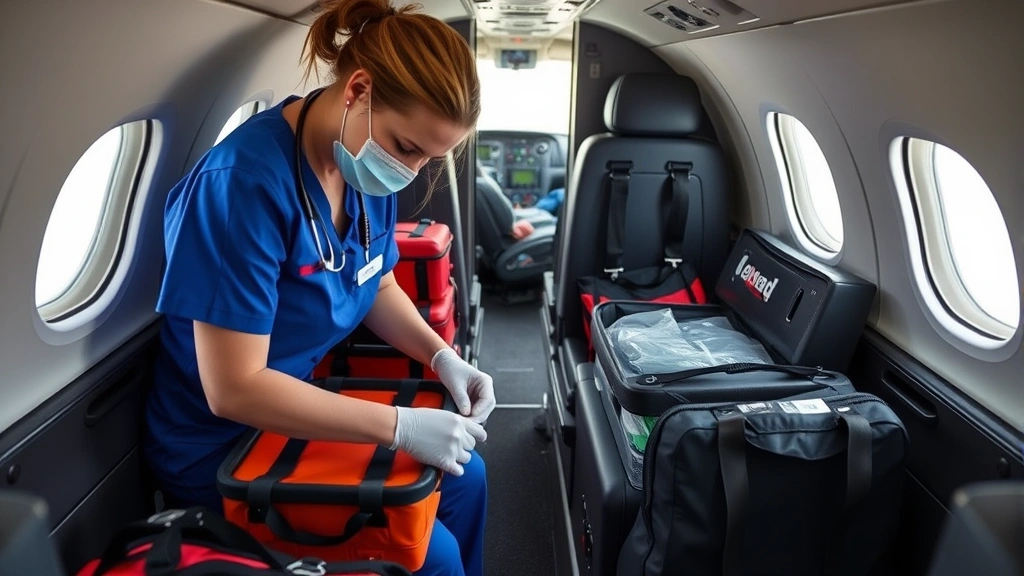
” alt=”Flight care nurse preparing medical equipment in aircraft cabin during pre-flight checklist”>
Challenges in Aerial Healthcare
Providing medical care at altitude presents unique physiological and logistical challenges unknown to traditional nursing environments. Understanding these challenges clarifies why flight nursing requires specialized expertise and explains why flight care nurses command respect within healthcare professions.
Altitude and Atmospheric Pressure Effects fundamentally alter patient physiology. As aircraft climb, cabin pressure decreases, reducing available oxygen. Patients with respiratory conditions, cardiac disease, or anemia may deteriorate rapidly at altitude. Gas-filled body cavities expand, potentially aggravating pneumothorax, bowel obstruction, or other conditions. Flight care nurses must anticipate these changes and intervene preventatively when possible.
Motion and Turbulence complicate patient care. Performing procedures while aircraft experience turbulence requires exceptional skill and stability. Starting intravenous lines, administering injections, or performing assessments becomes significantly more difficult with aircraft movement. Flight care nurses develop techniques to stabilize themselves and patients, often using their body weight and aircraft structure creatively.
Limited Diagnostic Capabilities force nurses to rely heavily on clinical assessment and patient history. Without imaging, laboratory tests, or advanced diagnostics, flight care nurses must make critical decisions based on physical examination and clinical intuition. This demands extensive experience and confidence in assessment skills.
Communication Challenges arise from aircraft noise, limited communication systems, and coordination with ground-based medical teams. Flight care nurses must clearly communicate patient status to pilots, air traffic control, and receiving facilities while managing patient care in a noisy environment.
Psychological Stress accompanies high-stakes medical decisions in an isolated environment. Flight care nurses cannot transfer care to other specialists or escalate to hospital resources immediately. They must manage patient anxiety, passenger concerns, and their own stress while maintaining professional composure and clinical excellence.
Career Opportunities and Growth
Flight nursing offers diverse career trajectories and professional development opportunities. Nurses can specialize in specific patient populations, advance to leadership roles, or combine flight nursing with traditional healthcare careers. The best airlines for long flights often maintain robust medical professional networks, creating opportunities for experienced flight care nurses.
Entry-level flight nurses typically begin with commercial airline positions or air ambulance services while maintaining hospital nursing jobs. This combination allows skill development without complete career transition. As experience accumulates, nurses often transition to full-time flight nursing roles with air ambulance services or military programs offering competitive compensation and comprehensive benefits.
Leadership opportunities include flight nursing supervisor positions, medical director roles for aeromedical services, and training responsibilities. Experienced flight care nurses frequently develop curriculum, train new flight nurses, and establish protocols for aeromedical programs. Some pursue advanced degrees, specializing in nursing management, healthcare administration, or aerospace medicine.
International opportunities exist through organizations providing medical evacuation services, humanitarian medical flights, and disaster response operations. Flight nurses with international experience and language skills access specialized positions with global medical organizations.
Professional advancement also occurs through specialty certifications. Flight care nurses can pursue credentials in specific areas like pediatric aeromedical nursing, critical care transport, or military aviation nursing, enhancing expertise and career marketability.
Working with Major Airlines
Major commercial airlines maintain relationships with medical professionals, including flight care nurses, who can respond to in-flight medical emergencies. These arrangements vary by airline but typically involve on-call systems where qualified medical professionals remain available during their shifts.
When passengers experience medical events on commercial flights, airlines may request assistance from medical professionals aboard the aircraft. Flight care nurses provide invaluable expertise, offering advanced assessment and treatment capabilities beyond standard first aid. Airlines recognize this value and often compensate medical professionals for on-call availability and emergency response.
The flight board systems at major hubs allow airlines to quickly identify available medical professionals, ensuring rapid response to emergencies. Some flight care nurses maintain relationships with specific airlines, receiving priority notification of medical events on their scheduled flights.
Working with commercial airlines offers flight care nurses professional recognition, compensation for emergency response, and opportunities to build clinical experience in unique environments. Many flight care nurses view commercial airline work as complementary to air ambulance or hospital positions, expanding their professional experience while maintaining diverse clinical practice.
Airlines increasingly invest in crew training for medical emergencies, recognizing that flight attendants often encounter medical situations requiring advanced assessment. Flight care nurses sometimes participate in training programs, educating flight attendants on emergency recognition and initial response protocols. This educational role extends flight nursing influence throughout aviation safety systems.

” alt=”Flight care nurse reviewing patient medical records and flight manifest during pre-departure medical briefing”>
FAQ
What is the average salary for a flight care nurse?
Flight care nurse compensation varies significantly based on position type, experience, and employer. Air ambulance flight nurses typically earn $55,000-$75,000 annually, with experienced nurses in urban markets earning higher salaries. Military flight nurses receive military salaries plus flight pay, often totaling $70,000-$90,000. Commercial airline compensation for on-call availability typically ranges $200-$500 monthly, plus emergency response fees. Delta Airlines flight attendant salary information provides context for airline-based medical professional compensation.
How many years of nursing experience do I need to become a flight care nurse?
Most flight nursing positions require 2-3 years of registered nurse experience in critical care, emergency medicine, or intensive care settings. Some positions, particularly military roles, may require additional experience. Entry-level flight nurses often work part-time while maintaining hospital positions, gradually transitioning to full-time flight nursing as experience accumulates.
Can flight care nurses work internationally?
Yes, international opportunities exist for flight care nurses through medical evacuation services, humanitarian organizations, and disaster response programs. International positions often require additional certifications, language proficiency, and experience with diverse patient populations and healthcare systems. Organizations like the International Committee of the Red Cross and Médecins Sans Frontières employ flight care nurses for medical transport missions globally.
What is the difference between flight nurses and flight paramedics?
Flight nurses are registered nurses with advanced certifications in critical care and emergency medicine. Flight paramedics are paramedics with additional aeromedical training. Both roles exist in aeromedical transport, with some programs employing nurse-paramedic teams. Nurses typically provide more comprehensive assessment and medication administration, while paramedics excel in field stabilization and rapid transport. Many aeromedical services employ both professionals in complementary roles.
Is flight nursing dangerous?
Flight nursing involves occupational hazards including aircraft accidents, exposure to infectious diseases, and stress-related health impacts. However, modern aviation safety standards significantly reduce accident risk. Flight nurses receive safety training, use appropriate personal protective equipment, and work within established protocols minimizing exposure. The psychological demands of high-stakes medical decisions represent the most significant occupational health challenge, addressed through peer support programs and mental health resources.
What certifications do I need to start flight nursing?
Essential starting certifications include RN licensure, ACLS certification, and typically CEN (Certified Emergency Nurse) or CCRN (Certified Critical Care Nurse) credentials. Many positions require PALS and TNCC certifications. The Flight Nurse Certification (FN-C) is pursued after gaining aeromedical experience. Specific employers may require additional certifications based on patient populations and aircraft types.
How do flight care nurses handle medical emergencies at 35,000 feet?
Flight care nurses follow established protocols, beginning with rapid patient assessment and determination of the emergency severity. They communicate with ground-based medical professionals via satellite phones or radio, providing patient information and receiving guidance. Immediate interventions focus on stabilization using available equipment and medications. For serious emergencies, flight care nurses coordinate with pilots to arrange emergency descent or diversion to nearest appropriate medical facility. Their training emphasizes decision-making under pressure, resource optimization, and clear communication with all involved parties.
External Resources:
- Federal Aviation Administration (FAA) – Aviation Safety Standards
- American Academy of Air Medical Services – Professional Standards
- Board of Certification for Emergency Nursing – Flight Nurse Certification
- American Academy of Orthopaedic Surgeons – Trauma Resources
- International Civil Aviation Organization – Aviation Medicine Standards