PSA Flight 182: Lessons Learned from Tragedy
On September 25, 1978, Pacific Southwest Airlines Flight 182 collided with a Cessna 172 over San Diego, California, resulting in 144 fatalities and becoming one of the deadliest aviation accidents in history at that time. This catastrophic event fundamentally changed aviation safety protocols, communication procedures, and collision avoidance systems worldwide. Understanding the circumstances surrounding this tragedy provides crucial insights into how modern aviation has evolved to prioritize passenger safety and prevent similar incidents from occurring.
The collision occurred in clear weather conditions during daylight hours, which made the accident particularly shocking to aviation professionals and the public alike. A small general aviation aircraft, piloted by a student, inadvertently entered the controlled airspace near San Diego International Airport without proper clearance. The convergence of human error, communication failures, and equipment limitations created a perfect storm that would ultimately lead to significant reforms in how aircraft traffic is monitored, managed, and communicated in busy airspace. Today, when you’re booking your next flight, you’re benefiting from safety improvements directly implemented following this tragedy.
What Happened on PSA Flight 182
Pacific Southwest Airlines Flight 182 was a scheduled passenger flight operating between Sacramento and San Diego, carrying 135 passengers and a crew of nine. The Boeing 727-214 was a reliable aircraft operating under normal conditions when it began its descent into San Diego International Airport. The Cessna 172, a small single-engine aircraft commonly used for training and private aviation, was flown by a student pilot attempting to reach Montgomery Field, a smaller airport in the San Diego area.
The collision occurred at approximately 9:02 AM local time at an altitude of 2,600 feet near North Park, a residential neighborhood in San Diego. The Boeing 727 struck the Cessna from above and behind, the impact completely destroying the smaller aircraft and causing catastrophic damage to the 727. The damaged airliner continued flying for approximately one minute before the pilots lost control. The aircraft descended steeply and impacted a residential area, destroying multiple homes and killing everyone on board as well as seven people on the ground.
The aftermath revealed a community in shock. First responders faced an overwhelming scene of devastation. The accident site covered several city blocks, with wreckage scattered across residential streets. The total death toll reached 144 people, making it the deadliest aviation accident in U.S. history at that time. For those concerned about airline safety when choosing carriers, it’s important to understand that modern safety standards directly address the failures that led to this tragedy.
Timeline of Events
The sequence of events leading to the collision reveals how quickly aviation situations can deteriorate:
- 8:59 AM: Cessna 172 pilot requests clearance to descend to 1,500 feet while approaching San Diego airspace
- 9:00 AM: Air traffic control clears Cessna to descend and maintain 1,500 feet, instructing pilot to report when reaching that altitude
- 9:01 AM: PSA Flight 182 receives clearance to descend to 2,000 feet and is advised of Cessna traffic at 1,500 feet
- 9:01:47 AM: PSA captain confirms he has the Cessna in sight and will maintain visual separation
- 9:02:00 AM: Collision occurs; PSA crew immediately reports emergency
- 9:02:58 AM: PSA Flight 182 crashes in residential area north of San Diego International Airport
The critical moment came when the PSA captain reported having the Cessna in sight. However, due to the geometry of their flight paths and the relative speeds of the two aircraft, what the captain believed he was tracking was actually a different aircraft. The Cessna pilot, meanwhile, was uncertain about his exact location and was following incomplete navigation information. This confusion, combined with inadequate radar technology and communication protocols, created a situation where neither pilot nor air traffic control had a complete picture of the actual positions of both aircraft.
Root Causes and Contributing Factors
Aviation accident investigations, conducted by the National Transportation Safety Board (NTSB), identified multiple contributing factors to this tragedy. Understanding these causes is essential for anyone interested in aviation safety and how the industry continues to evolve.
Communication Failures: The primary issue involved ambiguous radio communications between air traffic control and the Cessna pilot. The controller’s instructions were not sufficiently clear regarding the Cessna’s exact position and required altitude. Additionally, the Cessna pilot’s responses did not clearly confirm his understanding of the clearances, creating dangerous ambiguity in the tower.
Visual Identification Problems: The PSA captain reported having the Cessna in sight, but subsequently lost visual contact with the aircraft. Due to the relative positions and speeds of the aircraft, the captain likely acquired and tracked a different aircraft, believing it to be the Cessna. This demonstrates the inherent limitations of relying solely on visual separation in busy airspace.
Radar Limitations: The radar systems available to air traffic control at San Diego International Airport in 1978 were not capable of providing the precise, continuous tracking data that modern systems offer. The radar could not reliably show the exact altitude of all aircraft in the vicinity, making it impossible for controllers to verify that visual separation was actually being maintained.
Airspace Design: The convergence of Class B airspace (controlled airspace around major airports) and Class D airspace (controlled airspace around smaller airports) created complex traffic patterns. The Cessna pilot’s uncertainty about his location and navigation contributed to his inadvertent intrusion into the primary approach path for San Diego International Airport.
Training and Procedures: The investigation revealed that standard operating procedures for both commercial and general aviation pilots were insufficient to prevent such collisions. Pilots were not adequately trained in recognizing and responding to potential collision situations, and there were no standardized procedures for confirming visual separation.
Safety Improvements and Reforms
The tragedy of PSA Flight 182 prompted sweeping changes throughout the aviation industry. These improvements have made flying significantly safer and represent one of aviation’s most important safety evolutions.
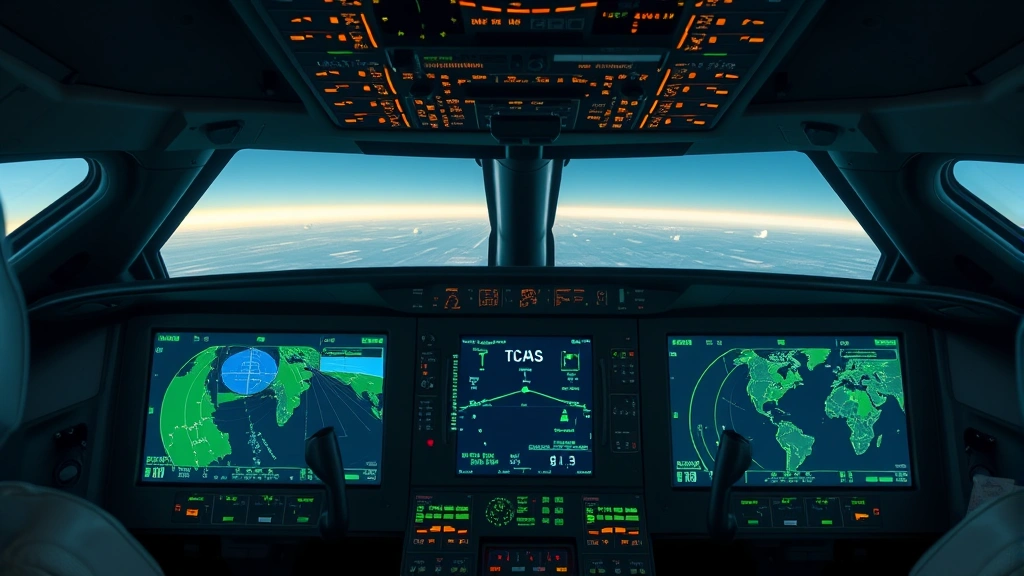
Traffic Collision Avoidance System (TCAS): Perhaps the most significant development was the acceleration of TCAS technology implementation. TCAS is an aircraft-based system that independently detects other aircraft in the vicinity and alerts pilots to potential collision threats. Unlike ground-based radar, TCAS operates independently and can function regardless of air traffic control capabilities. All commercial aircraft and many general aviation aircraft now carry TCAS, providing a critical safety layer that would have prevented the PSA Flight 182 collision.
Enhanced Radar Systems: The aviation industry invested heavily in upgraded radar systems capable of providing accurate altitude information and faster update rates. Mode C radar, which automatically reports aircraft altitude to air traffic control, became mandatory for all aircraft operating in controlled airspace. This technology allows controllers to verify that aircraft are actually at their assigned altitudes, eliminating dangerous assumptions.
Communication Standardization: The Federal Aviation Administration (FAA) implemented standardized phraseology and communication protocols to eliminate ambiguity in radio communications. Phrases like “say again” and specific altitude readback procedures became mandatory. Pilots now must read back critical clearances, and controllers verify that the readback is correct before proceeding.
Airspace Redesign: San Diego International Airport’s airspace was redesigned to better separate general aviation traffic from commercial traffic. Many airports implemented similar changes, creating clearer flight corridors and reducing the likelihood of inadvertent airspace intrusions.
Pilot Training Requirements: Commercial pilot training was enhanced to include specific instruction on collision avoidance, recognition of instrument limitations, and proper procedures for maintaining visual separation. General aviation training was similarly upgraded, with emphasis on understanding airspace regulations and maintaining situational awareness.
Modern Aviation Safety Impact
Today’s aviation environment is dramatically different from 1978, and the changes implemented following PSA Flight 182 represent a fundamental shift in how safety is approached. When considering essential tips for long haul flights, it’s reassuring to know that modern aircraft benefit from decades of safety improvements stemming from this accident.
Advanced Avionics: Modern commercial aircraft are equipped with sophisticated glass cockpits displaying real-time traffic information. Pilots have access to terrain awareness and warning systems (TAWS) that alert them to potential terrain conflicts. Synthetic vision technology provides pilots with computer-generated three-dimensional representations of the terrain and airspace around them, even in poor visibility conditions.
NextGen Air Traffic Control: The FAA’s NextGen program represents the most significant modernization of air traffic control infrastructure in decades. Automatic Dependent Surveillance-Broadcast (ADS-B) technology allows aircraft to broadcast their exact position, altitude, and velocity to both air traffic control and other aircraft. This technology provides far more accurate and frequent updates than traditional radar, creating an unprecedented level of situational awareness.
Procedural Changes: Modern standard operating procedures incorporate lessons learned from countless accidents, including PSA Flight 182. Commercial pilots follow strict procedures for every phase of flight, with multiple opportunities for cross-checking information and verifying clearances. The concept of “sterile cockpit” rules during critical phases of flight prevents distractions that could contribute to accidents.
Safety Culture Evolution: Perhaps the most important change is the evolution of aviation safety culture. The industry has embraced a philosophy of continuous improvement and non-punitive reporting of safety concerns. Airlines and regulatory agencies encourage pilots and controllers to report potential safety issues, near-misses, and hazardous situations without fear of punishment. This approach allows the industry to identify and address risks before they result in accidents.
For travelers concerned about safety, understanding that modern aviation continues to evolve based on lessons learned from past accidents provides reassurance. The aviation industry’s commitment to learning from tragedies and implementing systemic improvements has made commercial aviation the safest form of transportation available.
Regulatory Framework: The International Civil Aviation Organization (ICAO) has established international standards and recommended practices that all member countries implement. These standards ensure that safety protocols are consistent worldwide, reducing the risk of accidents caused by inconsistent procedures or equipment.
The legacy of PSA Flight 182 extends far beyond San Diego. The accident prompted international aviation authorities to adopt new standards and procedures. Countries worldwide implemented TCAS requirements, enhanced radar systems, and standardized communication protocols. Today, when you’re finding cheap airline tickets to Europe or anywhere else in the world, you’re flying on aircraft equipped with safety systems that directly trace their development to this tragedy.
FAQ
What was PSA Flight 182?
PSA Flight 182 was a Pacific Southwest Airlines Boeing 727 that collided with a Cessna 172 near San Diego, California, on September 25, 1978. The accident resulted in 144 deaths and was the deadliest aviation accident in U.S. history at that time.
How did the collision happen?
The collision occurred due to a combination of factors: the Cessna pilot inadvertently entered controlled airspace, communication failures between the pilot and air traffic control, visual identification errors by the PSA captain, and limitations in radar technology. The PSA captain believed he had the Cessna in sight but was actually tracking a different aircraft.
What safety improvements resulted from this accident?
Major improvements included the acceleration of TCAS (Traffic Collision Avoidance System) implementation, enhanced radar systems with altitude reporting, standardized radio communication protocols, airspace redesign, and improved pilot training in collision avoidance procedures.
Is TCAS mandatory on all aircraft today?
TCAS is mandatory on all commercial aircraft and many general aviation aircraft operating in controlled airspace. While not required on all small general aviation aircraft, the technology has become nearly universal on commercial carriers.
How has air traffic control changed since 1978?
Modern air traffic control systems utilize sophisticated radar, computer systems, and satellite-based technology like ADS-B. Controllers have real-time access to precise aircraft positions, altitudes, and velocities, allowing them to maintain safer separation and prevent conflicts.
Why is the PSA Flight 182 accident still studied today?
This accident remains a cornerstone of aviation safety education because it demonstrates how multiple human factors and system limitations can combine to create a catastrophic event. It illustrates the importance of redundancy, standardization, and continuous improvement in safety systems.
Could this accident happen today?
Modern safety systems make such a collision extremely unlikely. TCAS would alert both pilots to the danger, modern radar would provide precise altitude information to controllers, and enhanced communication procedures would eliminate the ambiguity that contributed to the original accident. However, aviation professionals remain vigilant, recognizing that complacency is always a potential danger.